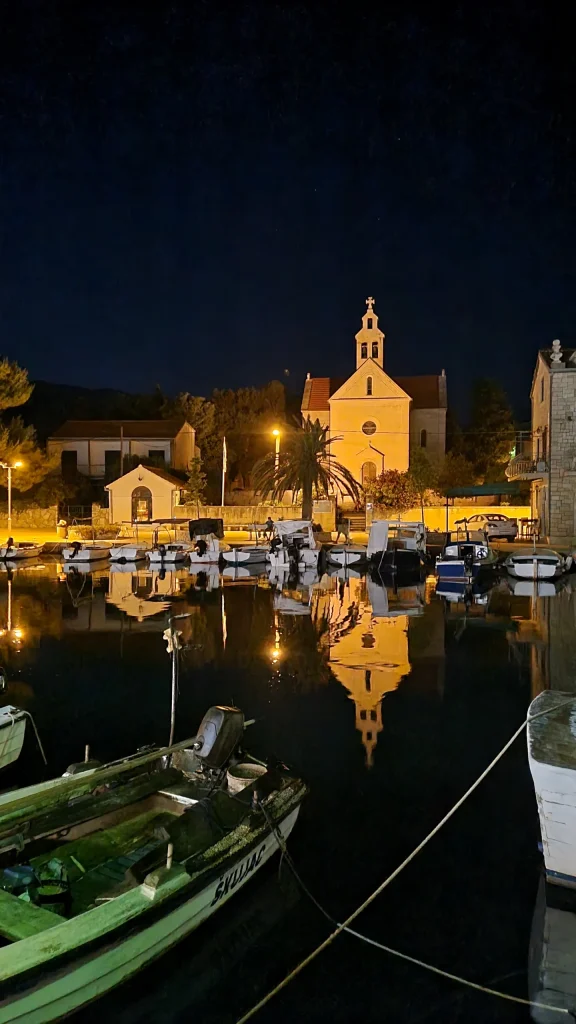
Sucuraj is a fishing town of about 400 residents, so nobody comes here for a long restaurant list. What you get instead is a handful of konobas serving what came in that morning, at a pace that suits a holiday.
What a konoba is
A konoba is a family-run tavern. The menu is short, often written by hand, and it changes with the catch and the season. You order, and then you wait a while, because most of it is cooked to order over an open fire.
That wait is the point. Order a glass of local wine, watch the harbour, and let the evening take its time.
The dishes worth ordering
Two things define Dalmatian cooking here, and both are worth planning around.
Rostilj is the grill: whole fish, squid, or lamb and pork, cooked over embers with olive oil, garlic and parsley. Fish is priced by the kilo, so ask what came in that day and how big the piece is before you order.
Peka is meat or octopus cooked slowly under an iron bell covered with hot coals. It takes two to three hours, so it has to be ordered in advance, usually the day before. If you do one meal out on your stay, make it this one.
Where to eat in the village
Several konobas open through the season, along with bars for coffee, an evening drink or a simple pause by the harbour. They sit within a short walk of each other, so the easiest approach is to look at what is busy and go there.
Ask us when you arrive. We know who is cooking well that season and who has the quietest terrace, and it changes from year to year.
Cooking at home
Both apartments have a fully equipped kitchen, and many guests cook more than they expect to. The village makes it easy:
- A small Konzum supermarket and one Studenac for the basics.
- A daily fruit and vegetable stall.
- Fresh fish, bought directly from local fishing families.
There is a shared patio with a barbecue in the olive grove, which is where most guests end up on their last evening.
Our own produce
Our family makes red and white wine, olive oil, dried figs, liqueurs and honey on the estate. You will find some of it in the welcome hamper when you arrive, and you can buy more directly from us to take home.
The olive oil comes from the trees around the house. It is not a shop product with a label and a story, it is simply what the grove gave that year.
A practical note
Some konobas take cash only. There is an ATM and an exchange office in the village, but no bank, so it is worth having some euros with you for the evening.
Planning your stay in Sucuraj? Check our available apartments.